Decorative Vent Covers: Design Options for Every Room in Your Home
QUICK ANSWER: Decorative vent covers are HVAC registers, grilles, and returns finished to match or complement a room's surfaces instead of a plain stamped-metal face. They come in coordinated tones, patterned designs, and custom finishes built for floor, wall, and ceiling openings, and they're engineered with enough open area that airflow performance stays the same as a standard cover. The difference is entirely visual: a decorative cover reads as part of the room's design instead of as leftover construction hardware.
You notice the vent before you notice anything else in the room. Not the crown molding, not the paint color, not the light fixture — the flat white grate sitting in the middle of a floor you spent weeks choosing. It happens in new builds and full remodels alike: every finish in the room gets specified down to the grout line, and then a builder-grade register goes in without a second thought. Decorative vent covers exist to close that gap, and the category covers more ground than most homeowners realize once they start looking.
What Counts as a Decorative Vent Cover
A decorative vent cover is any register, grille, or return that's been finished for appearance as well as airflow, rather than left in its stock stamped-metal state. That finishing work can take a few different forms.
Coordinated Color Matching
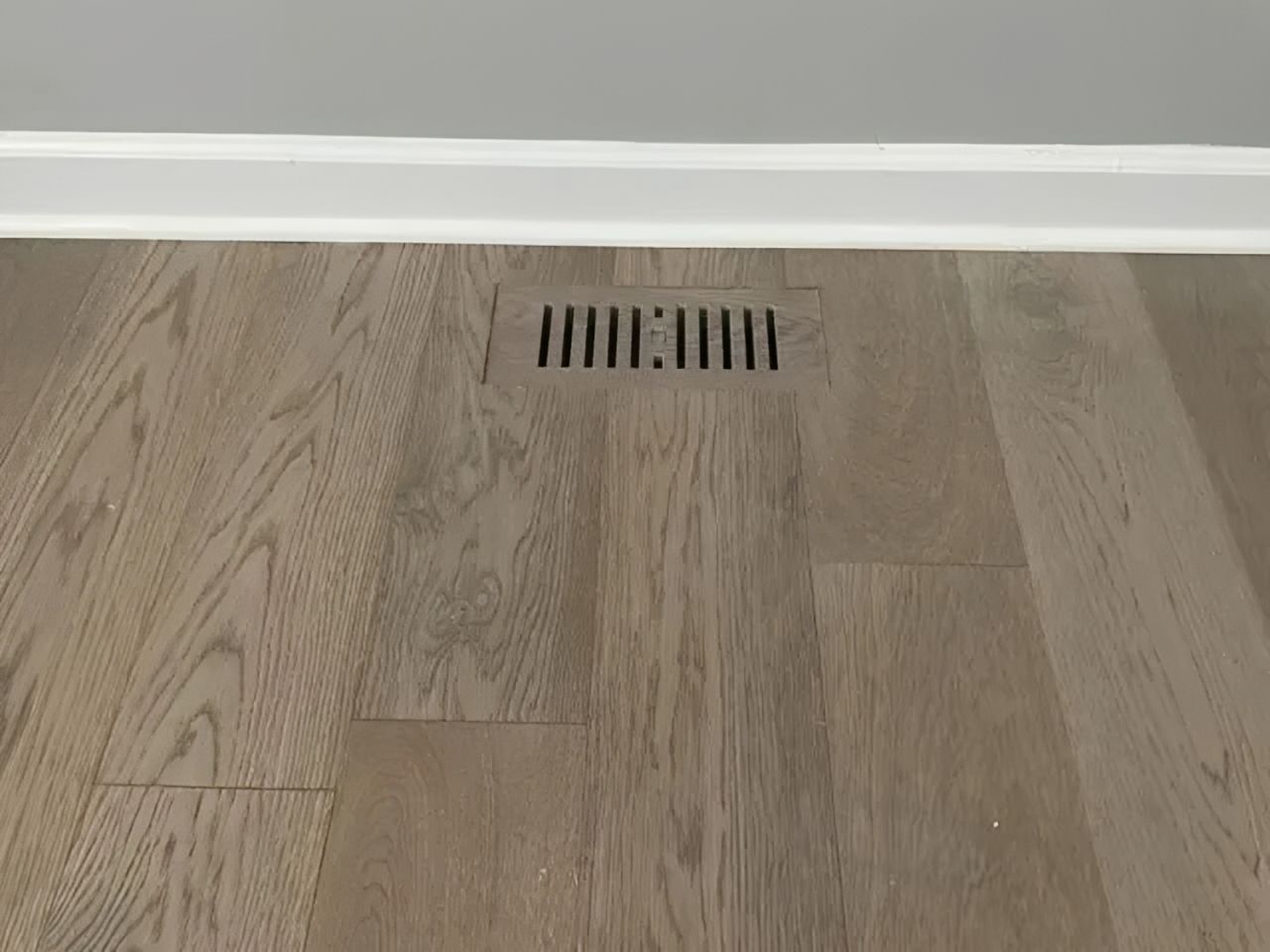
The cover is finished in a tone pulled from the surrounding surface — the floor, the wall paint, the trim — so the register recedes instead of standing out as a separate object.
Patterned Faces
Instead of a plain grid of slats, the cover carries a design that reads as an intentional accent. This is the option homeowners reach for when they want the vent to contribute to the room's look rather than just disappear into it.
Custom Material And Finish Matching
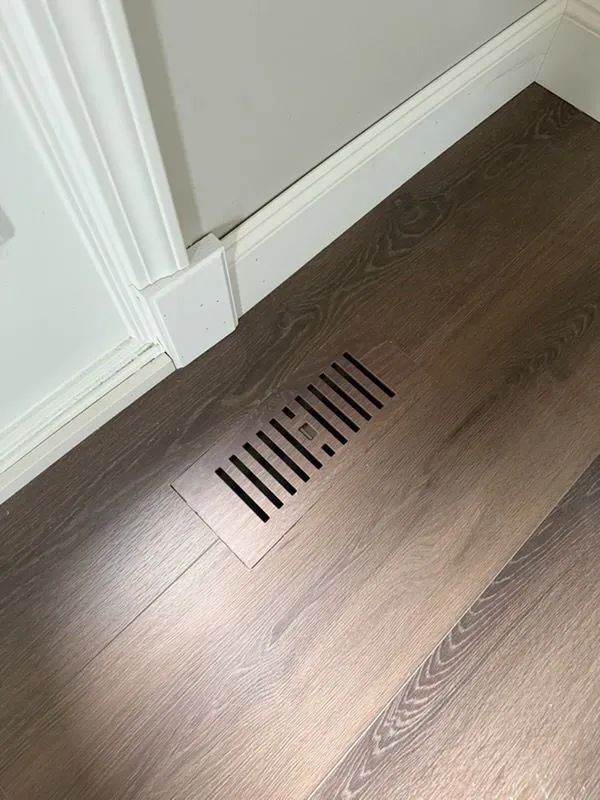
The cover is built to echo a specific palette or surface — tile, wood grain, vinyl plank — so it sits into the floor or wall as part of the pattern rather than as a metal interruption in it.
The through-line across all three is that the cover is chosen for the room, not pulled off a shelf and made to work as an afterthought.
Where Decorative Covers Get Used
Registers, grilles, and returns show up in every part of a home, and each location puts different demands on a decorative cover.
Floor Registers
These sit underfoot and take the most physical abuse of any vent in the house — foot traffic, furniture legs, the occasional dropped object. A decorative floor cover needs reinforcement built in so the finish holds up to daily wear while still coordinating with the flooring around it.
Wall Covers
A wall register sits at eye level, which means a plain grate is harder to ignore than one buried in the floor. Finishing a wall cover to match the surrounding surface turns it into a detail that reads as part of the room's styling instead of a break in it.
Ceiling Grilles
Overhead vents are large and visible from almost anywhere in the room below. Coordinating the finish to the ceiling keeps a strong white-on-white or white-on-color contrast from drawing the eye upward every time someone walks in.
Return Air Grilles
Returns are often the biggest opening in a room, and because they're functional rather than decorative by default, they're usually the plainest thing on the wall. Finishing a return the same way as the supply registers ties the whole room's airflow hardware together instead of leaving one large gap in the design.
Room by Room: Where This Matters Most
Not every room puts the same pressure on a vent cover, and the priorities shift depending on the space.
Living And Open-Concept Areas
These rooms show every detail because there's nowhere for a plain grate to hide — the vent is either near the seating area on the floor or on a feature wall, both high-visibility spots. Coordinated registers keep attention on the room instead of on the hardware.
Kitchens And Dining Spaces
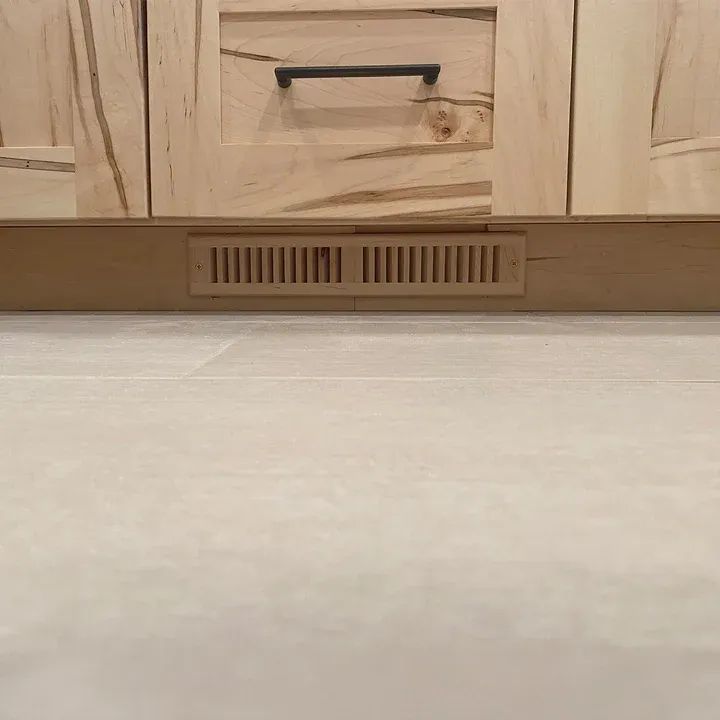
Hard flooring, heavy foot traffic, and frequent cleaning all put wear on a register here, so the cover needs to match tile, wood, or vinyl and hold up structurally at the same time.
Bedrooms
A bedroom is supposed to feel calm, and a stark grate on the floor or ceiling works against that. Matching the register to the surrounding surface removes one more thing pulling focus in a room meant for rest.
Hallways And Entryways
These are transition spaces, often with vents positioned at eye level on a wall, and they set the first impression of a home. A coordinated register signals a finished space rather than one still waiting for the last details.
Basements And Bonus Rooms
Lower-level spaces frequently get the plainest, most overlooked vent hardware in the house, even after the rest of the room has been finished out. Bringing the registers up to the same standard as the main floor makes the space feel like a continuation of the home rather than an afterthought.
Design and Material Considerations
Choosing a decorative cover is a design decision as much as a functional one, and a few factors shape the outcome.
Surface Matching Versus Contrast
Matching the cover to the floor or wall makes it disappear, which is the right call in a room where you want the flooring or millwork to be the star. A deliberate pattern or contrasting finish does the opposite — it turns the vent into a small design moment, which works well in a room that already leans toward bold or eclectic choices.
Traffic And Location
A cover in a mudroom or main hallway is going to see more wear than one in a formal dining room, so the location should inform how the piece is finished and reinforced, not just how it looks.
Opening Size And Shape
Wall and ceiling openings tend to be more standardized, but floor registers and return grilles vary more from house to house. Getting exact opening measurements before ordering keeps the finished cover from sitting proud of the surface or leaving gaps at the edges.
TIP: Before choosing a finish, pull a sample of the flooring, tile, or paint you're matching and look at it in the same light the vent will actually sit in. Undertones that look identical under a showroom light can read differently under a north-facing window or warm bulb.
Function Doesn't Take a Back Seat
The most common hesitation with a decorative cover is whether the finish work compromises airflow, and it's a fair question — a cover that looks better but performs worse isn't actually an upgrade. The open area behind a decorative face needs to be engineered the same way it would be on a standard register, so conditioned air moves through the opening at the rate the system was designed to deliver. A well-made decorative cover doesn't ask you to trade comfort for appearance; it's built to do both jobs at once, the same as any register that's just doing its job quietly.
That balance is also why reinforcement matters more on floor covers than on wall or ceiling pieces. A register that looks finished but flexes or wears through its coating within a year isn't solving the original problem — it's just delaying it. Durability and airflow performance are part of what separates a genuinely decorative cover from a painted or wrapped stock grate.
Getting the Fit Right
Ordering a decorative cover starts with measurements, not a catalog page. Because openings vary by house, age of construction, and even room to room within the same home, an accurate opening size is what keeps the finished piece from looking like an add-on. Surface details — the exact tile, wood species, paint color, or fabric you're matching — round out what's needed to produce a cover that actually coordinates rather than approximates.
From there, most projects move through a short sequence: measurements and surface details are submitted, a custom estimate comes back, the design and sizing get confirmed, and production begins. Because every opening and finish combination is different, this isn't a stock-item process — it's closer to ordering a piece of trim work than picking a part off a shelf.
WARNING: Skipping an exact measurement of the opening — width, length, and depth of any surrounding frame or flange — is the single most common cause of a decorative cover that doesn't sit flush. Measure the actual opening, not the visible grate currently covering it, since existing covers are often sized slightly larger than the hole they conceal.
Why This Detail Gets Overlooked So Often
Vent covers get specified last, if they get specified at all, because they're functional hardware first and a design element second in most builders' minds. Flooring, cabinetry, lighting, and paint all get selected with intention, while the register that sits in the middle of that flooring is treated as a mechanical afterthought — installed by whoever's on-site with whatever stock part is on the truck. The result is a room that's been fully designed except for the handful of openings the HVAC system actually needs, and those openings are rarely small or easy to ignore once you start noticing them.
Decorative covers close that gap without requiring a renovation. Because they replace existing registers, grilles, or returns rather than requiring new ductwork or structural changes, they're one of the few finishing upgrades that can be addressed on its own, room by room, without touching anything else in the space.
Frequently Asked Questions
Do decorative vent covers reduce airflow compared to standard covers?
No. A properly engineered decorative cover maintains the same open area behind its face as a standard register, so the HVAC system continues circulating air at the rate it was designed for. The finish changes the appearance of the cover, not the mechanics behind it.
Can a decorative cover be matched to a specific tile, wood, or paint color?
Yes. Custom finishes can be built to coordinate with a specific surface or palette rather than choosing from a small set of stock colors. Sharing a sample or photo of the material you're matching gives the clearest result.
Are decorative floor registers durable enough for high-traffic rooms?
Floor covers can be reinforced specifically for traffic, which matters in entryways, kitchens, and hallways where a register gets stepped on and cleaned around constantly. A cover intended for a formal, low-traffic room doesn't need the same reinforcement as one in a mudroom.
What's the difference between a decorative floor register and a decorative wall cover?
Floor registers need reinforcement for foot traffic and are usually finished to match flooring, while wall covers sit at eye level and are finished to blend with paint, wallpaper, or trim. Both serve the same airflow function but face different physical demands and different visibility.
Can return air grilles be made decorative too, or only supply registers?
Return grilles can be finished the same way as supply registers and often benefit the most, since they're typically the largest opening in a room and the plainest by default. Coordinating a return's finish with the rest of the room's vent covers keeps the whole airflow system visually consistent.
How much lead time should I plan for a custom decorative vent cover?
Lead time depends on the finish, pattern, and number of openings involved, since each cover is built to order rather than pulled from stock. Getting exact measurements and surface details submitted up front is the fastest way to move from estimate to production.
Finishing Every Room Down to the Details
Decorative vent covers prove that practical HVAC components do not have to interrupt a carefully planned interior. With coordinated finishes, surface-matched designs, and options for floors, walls, ceilings, and returns, homeowners can make airflow hardware feel intentional. Tec - Vents brings 20 years of experience serving customers across North America, creating decorative solutions that balance appearance, durability, proper fit, and reliable airflow while complementing the materials and finishes already used throughout each individual room.
Whether the goal is to help a floor register blend into new hardwood or make a large return grille less noticeable, the right cover brings consistency to the entire space. Accurate measurements, appropriate reinforcement, and thoughtful finish selection ensure the finished piece looks like it belongs there from the beginning. When vents receive the same attention as flooring, paint, cabinetry, and trim, even these necessary openings become part of a cohesive design that feels complete from every angle.