Matching Vents to Luxury Vinyl Plank Without the Paint Touch Up Look
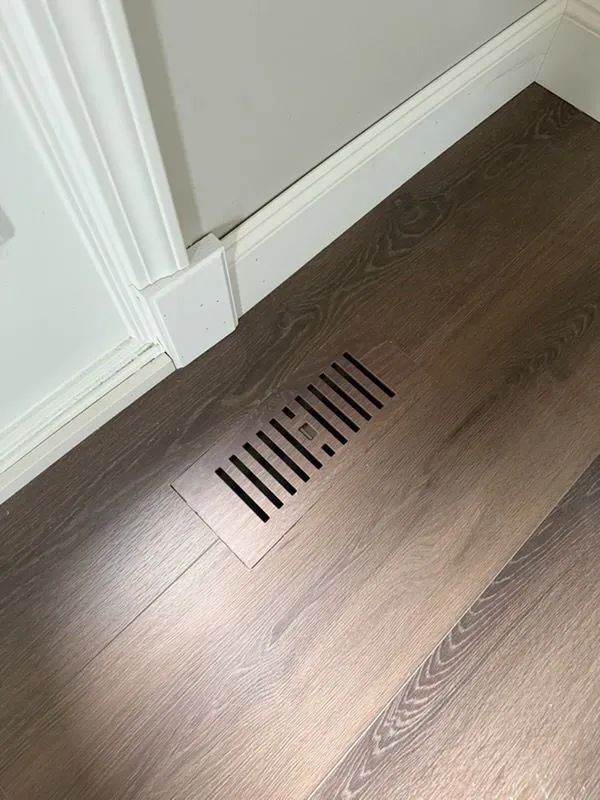
QUICK ANSWER: The most convincing vent for luxury vinyl plank is one that reproduces the plank itself, not one painted to approximate it. Vinyl plank carries a printed design layer under a clear wear layer, so the grain, the color shifts, and the sheen all vary from board to board, and a flat coat of paint cannot copy that. A vent that is scanned from your actual plank and printed with UV cured inks carries the same pattern across the opening. Built as a flush mount or an overmount to suit the floor, and engineered with open area for airflow, it reads as one more board in the run.
The installer packed up the last of the spacers, and the floor looked finished until you walked to the far end of the room. There, in the middle of a long run of warm oak look planks, sat a white metal rectangle, or worse, a brown one with a brushed on coat of stain color that was close from the doorway and obviously wrong from three feet away. Nobody had planned for it. The planks had been chosen carefully, the transitions had been handled, and the vent was left to the end like an afterthought, which is exactly how it looks.
Luxury vinyl plank has become one of the most common floors in new builds and remodels, and it is easy to see why homeowners, designers, and builders keep specifying it. It also happens to be a surface that punishes a bad vent match more than most, because the whole point of the floor is a convincing, continuous image. This article walks through why vinyl plank is hard to match, why paint touch ups give themselves away, what a scanned and printed vent does differently, and how to plan the opening so the finished result looks deliberate.
Why Vinyl Plank Makes the Vent Problem Harder
On a painted subfloor or a plain carpeted room, a vent only has to be a neutral color. On luxury vinyl plank, the vent has to be part of a picture. The floor is designed to look like wood or stone, and a register that does not carry that picture stops the illusion at the exact spot where the eye likes to rest.
The Floor Is A Printed Image
Vinyl plank has several layers, including a clear wear layer, printed film, core, and often attached padding. That printed film creates the floor’s appearance. A mismatched vent lacks that pattern, making it visibly look like another material.
The Pattern Repeats On A Schedule
Better vinyl planks spread their printed design across multiple boards before repeating. A flat colored vent cannot follow that rhythm. Even a matching tone looks disconnected because surrounding planks contain natural variation that the vent lacks.
Texture And Sheen Are Part Of The Match
Many vinyl planks combine printed designs with embossed textures and specific gloss levels. A painted metal register remains smooth and reflects light differently. Matching color alone cannot recreate the plank’s texture, surface depth, or changing appearance.
The Vent Sits In The Highest Attention Spot In The Room
Registers often appear near walls, windows, or hallway ends, placing them directly within your sightline when entering. Even when the surrounding floor looks flawless, one mismatched grate can make the entire installation feel visibly unfinished.
What the Layers of a Plank Mean for a Match
You do not need to be a flooring expert to match a vent to vinyl plank, but a few details about how the plank is made explain why some approaches fail.
The Wear Layer Sets The Surface Character
The wear layer is a clear coating measured in mils, or thousandths of an inch. It protects against daily scuffs while creating the plank’s sheen. A matching vent needs a durable finish that maintains its appearance around frequently contacted edges.
The Design Layer Is The Thing To Copy
Because color and grain come from the printed film, matching the actual image produces better results than guessing. Scanning a plank captures its tones, grain structure, and pattern variation, allowing the vent to reproduce the floor’s appearance accurately.
The Core And Pad Decide How The Opening Is Cut
Floating vinyl planks lock together and rest on the subfloor without fasteners. This affects how planks are trimmed around vent openings and how surrounding boards move. The installer needs to create a clean, square opening so the register fits properly.
Planks Differ From Line To Line
Two products labeled oak look can have different undertones, grain patterns, and sheen levels. Matching by product name or paint swatch is unreliable. Working from an actual plank provides a more dependable reference for reproducing the floor’s appearance.
Why Paint Touch Ups Give Themselves Away
Painting the old metal register is the first thing most people try, and it is easy to understand the appeal. It is quick, it needs no ordering, and it seems like it should be close enough. In practice it is the approach that creates the paint touch up look this article is about.
Paint Is One Flat Color
Paint creates one consistent color, while vinyl plank contains natural variation across each board. Even a carefully mixed paint becomes one average tone. Beside a varied plank, that average appears noticeably flat, especially when the surrounding flooring has strong color variation.
There Is No Grain To Carry Across
A brushed wood tone cannot reproduce grain direction that continues naturally across surrounding boards. If planks run lengthwise while the vent shows no grain or conflicting brush strokes, the difference becomes immediately visible to anyone looking closely.
Metal And Vinyl Catch Light Differently
Painted steel reflects light based on its coating and metal surface underneath. Vinyl plank gets its sheen from the wear layer. Under angled or raking light, these surfaces reflect differently, making even closely matched colors appear noticeably unrelated.
Painted Edges Chip Where The Traffic Is
Floor registers face constant contact from shoes, vacuum wheels, and furniture legs. Paint not designed for this wear can scuff away and expose bare metal. A chipped white or gray edge can look worse than the original plain register.
WARNING: Do not try to match a vent by painting it from a swatch or a small sample piece held up in store lighting. A color that looks right under showroom lights often shifts under your own windows and lamps, and a flat coat can never reproduce the variation across the planks, so you may end up with a vent that is more noticeable than the one you started with.
How a Scanned and Printed Vent Reproduces a Plank
The alternative to approximating the floor is to copy it. That is the idea behind a color matched vent: instead of choosing a paint color, you start from the floor itself.
The Plank Is Scanned
An advanced surface scan captures your plank’s actual color, tone, grain, and pattern. This creates an accurate reference for printing, reducing differences caused by photographs, lighting conditions, or bulbs that can change how flooring colors appear.
The Image Is Printed With UV Inks
The captured surface is printed onto the vent using specialty UV inks. UV curing helps the ink bond to the surface and resist everyday scratches. The plank’s grain, tone shifts, and overall character transfer onto the register face.
The Vent Is Built For The Way A Floor Is Used
A floor register must handle weight, remain flat, and lift out when ductwork requires access. For high traffic areas, a matched vent should be reinforced, retain its finish, and remove without damaging surrounding planks during maintenance.
The Result Reads As Part Of The Run
When the printed pattern aligns with surrounding boards, the register becomes less noticeable. From across the room, it can resemble another plank. Up close, the grille pattern remains the clearest indication that an opening sits underneath.
Many people also wonder about the alternative of cutting a vent out of leftover plank. That can produce a good match for the face, but it is a different process with its own tradeoffs, since a vent has to carry airflow and structure and a bare piece of plank has neither. A printed approach lets the register be engineered for open area and strength while still carrying the look of the floor.
Flush Mount or Overmount on Vinyl Plank
Once the look is settled, the other decision is how the vent sits relative to the floor. Both options are common, and the right one depends on how the floor is installed and how you want the finished surface to feel.
Flush Mount Sits Level With The Plank
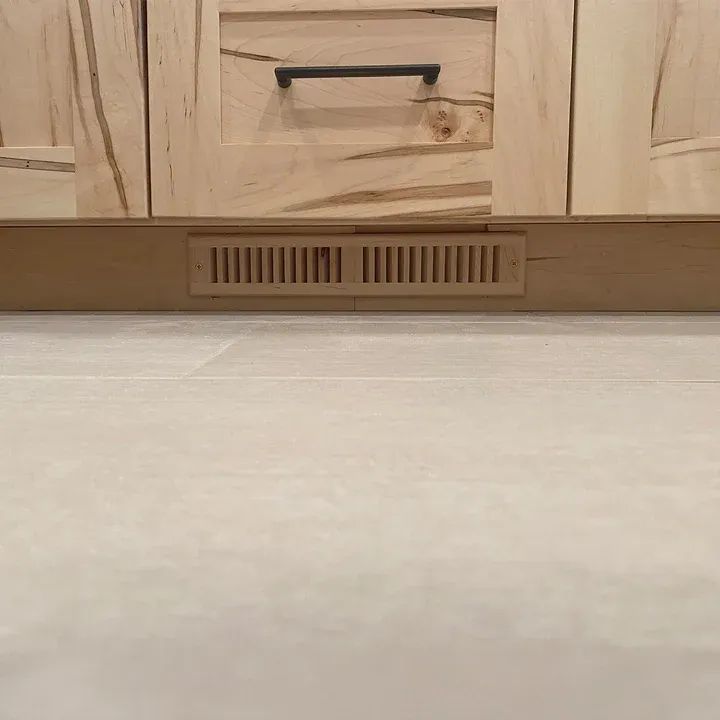
A flush mount register finishes even with the surrounding floor, creating a smooth, continuous surface. It works well when the goal is to make the vent blend into the flooring. Accurate cutting is essential so the frame sits correctly.
Overmount Rests Slightly On Top
An overmount, sometimes called a drop-in style, has a lip that rests on the floor around the opening. This design hides imperfect cut edges and can work well when openings were cut before selecting the register.
Floating Floors Need Room To Move
Floating vinyl plank requires space for slight expansion and contraction, with perimeter gaps typically hidden beneath trim. Around vent openings, installers should follow the flooring manufacturer’s guidance for cut placement and required clearance without pinning planks.
Plank Thickness Affects The Fit
Vinyl plank thickness varies, and cores or attached pads contribute to the finished height. A flush mount register must match that height to sit level. Providing the manufacturer with plank details or a cutoff piece helps ensure accurate fit.
Planning the Vent Before the Last Row Goes Down
The cleanest vinyl plank vent installs are the ones where the vent was part of the plan from the start. That is easy for builders and remodelers to do and easy for homeowners to miss.
Measure The Opening, Not The Old Cover
Floor register sizing refers to the duct opening, not the register’s outside dimensions. Common residential openings include 4 by 10, 4 by 12, and 6 by 10 inches. Measure the opening itself, especially before flooring installation begins.
Install Planks Up To The Opening
Remove the existing register and install planks toward the opening. Mark the plank crossing it, cut carefully with a jigsaw, and smooth the edge. A clean, square opening helps a flush mount register sit properly and evenly.
Decide The Vent Finish When You Pick The Plank
Consider the register when selecting your flooring. Keep a cutoff or spare plank from the same production lot, because color can vary between lots. Using an actual floor sample gives the manufacturer the most accurate reference for matching.
TIP: Set aside a few spare planks from the same box lot before the installer finishes, and label them for the vent order. If you are ordering after the floor is down, lift a plank from a spot that is hidden under a closet or an appliance footprint, or ask your installer for the offcuts. A real piece of your own floor beats any photo or swatch.
Choosing What to Match and Sending What a Maker Needs
A color matched vent is only as accurate as the information behind it. A few decisions make the order smoother.
Match The Floor Around The Vent
If your plank has strong color variation, the flooring immediately surrounding the vent matters most. Sending a plank that reflects that area’s typical appearance helps the printed pattern align naturally with what people will see around the register.
Share Every Detail You Have
Provide the plank brand and line, finish, opening size, damper requirements, and preferred mounting style. Natural light photos can show context, but a physical plank sample remains more reliable for accurately matching the actual flooring surface.
Think About Every Vent In The Room
Consider floor registers alongside wall registers and ceiling diffusers. Matching only one can make the others appear more noticeable. Coordinating each register with its surrounding surface creates a more intentional appearance throughout the entire room.
Think About Airflow As A Design Input
A register must move conditioned air effectively, so its open area matters. A decorative pattern with too little free area can restrict airflow. A properly designed matched vent preserves sufficient openings, while your HVAC contractor can confirm requirements.
Frequently Asked Questions
Can you really match a vent to luxury vinyl plank?
Yes. It starts with your actual plank. The surface is scanned, and the tones and pattern are printed onto the vent face with UV inks, so the register carries the same look as nearby boards.
Why does a painted vent look off on vinyl plank?
Paint gives one flat color, while vinyl plank is a printed image with grain, tone shifts, and its own sheen. Paint cannot carry that variation, the metal reflects light differently, and it chips where people step.
Should I choose a flush mount or an overmount for vinyl plank?
A flush mount sits level with the floor and gives a continuous look. An overmount rests on top and covers the cut edge, which helps when the opening is not square. Your installer can advise.
What should I send to get an accurate color match?
Send a cutoff or spare plank from the same lot as your floor, along with the opening size and your flush mount or overmount style. Photos in natural light help, as does the plank brand.
Will a decorative vent restrict my airflow?
It can if the face has very little open area, so the grille design matters as much as the print. A register built with engineered open area keeps air moving the way your system intends.
Can the vent be removed for duct cleaning?
Yes. A floor register is designed to lift out so you can reach the duct, and a well built matched vent sets back into place cleanly. Confirm this before ordering, since access protects the planks.
A Vinyl Plank Floor That Truly Looks Finished
Luxury vinyl plank earns its popularity by looking like something it is not, and that illusion deserves a vent that plays along. A painted grate, a stock white cover, or a close but flat color will show the eye where the picture ends and the hardware begins. Copying the plank itself solves that, because the register stops being a separate object and becomes another board in the run. When the grain and tone carry across the opening, the whole room feels settled.
Plan the opening while the floor is still going down, keep a few spare planks, and settle on a flush mount or an overmount with your installer. For 20
years, Tec - Vents
has made
color matched vents
for homeowners, designers, and contractors across all of North America, and one lesson has held steady. The best results start with a real piece of your own floor. Give that small rectangle the same care as every plank around it, and it becomes the detail that makes the room look complete.